fishing line
The fishing line is the central physical instrument of Santiago's ordeal, a thick, carefully managed cord that connects him to the marlin and becomes the medium through which he endures pain, tests his will, and ultimately loses his prize to sharks. It is not merely a tool but an extension of the old man's body and spirit, a lifeline that binds him to the great fish in a contest of endurance and intelligence.
Construction and Preparation
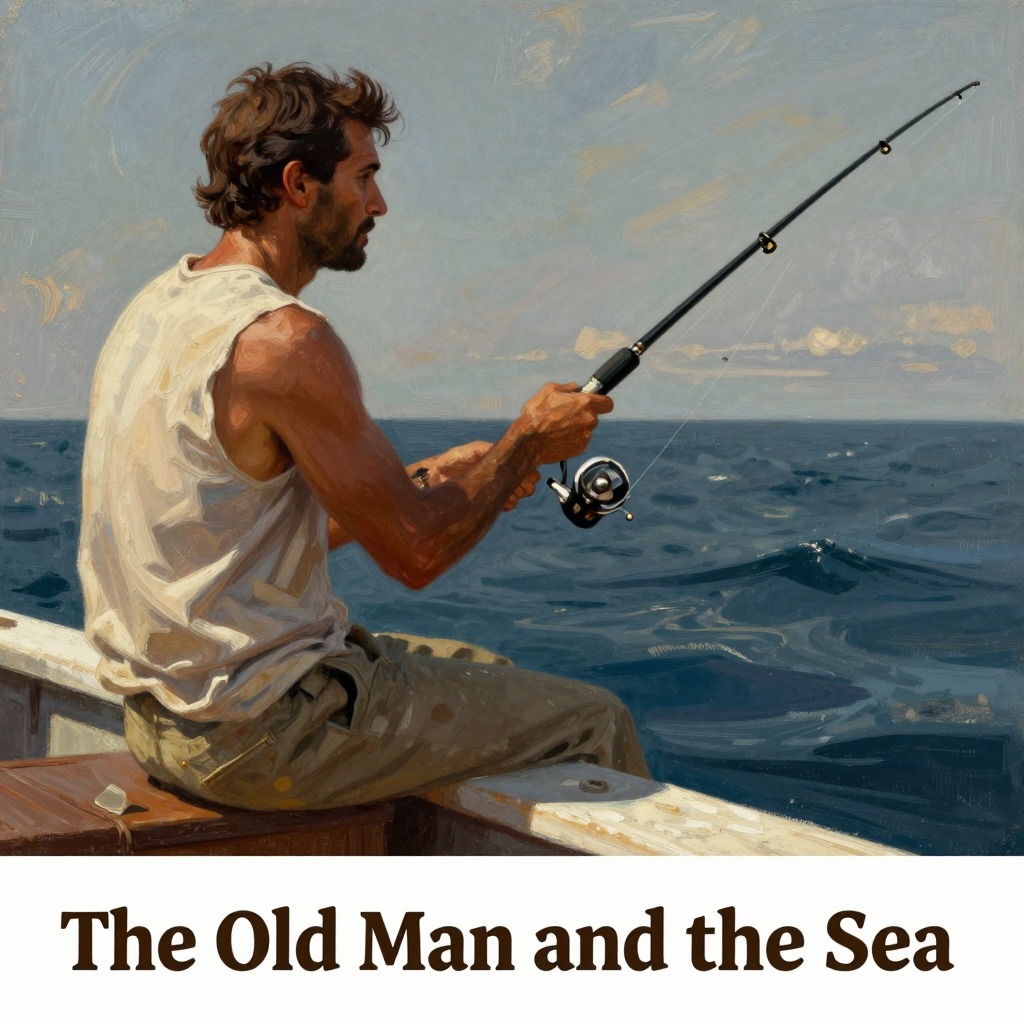
Santiago's fishing line is a heavy, specialized tool, as thick around as a big pencil, made of good Catalan cordel. Each line is looped onto a green-sapped stick so that any pull or touch on the bait will make the stick dip, serving as a sensitive indicator. The old man keeps his lines with precision, ensuring they are straighter than anyone else's, so that at each level in the darkness of the stream there is a bait waiting exactly where he wishes it to be. He has three forty-fathom coils of line in reserve, as well as the coil he is using, and each line has two forty-fathom coils which can be made fast to the other spare coils, allowing a fish to take out over three hundred fathoms of line if necessary. The line is strong and made for heavy fish, and Santiago holds it against his back until it is so taut that beads of water jump from it.
The Line as a Medium of Connection and Conflict
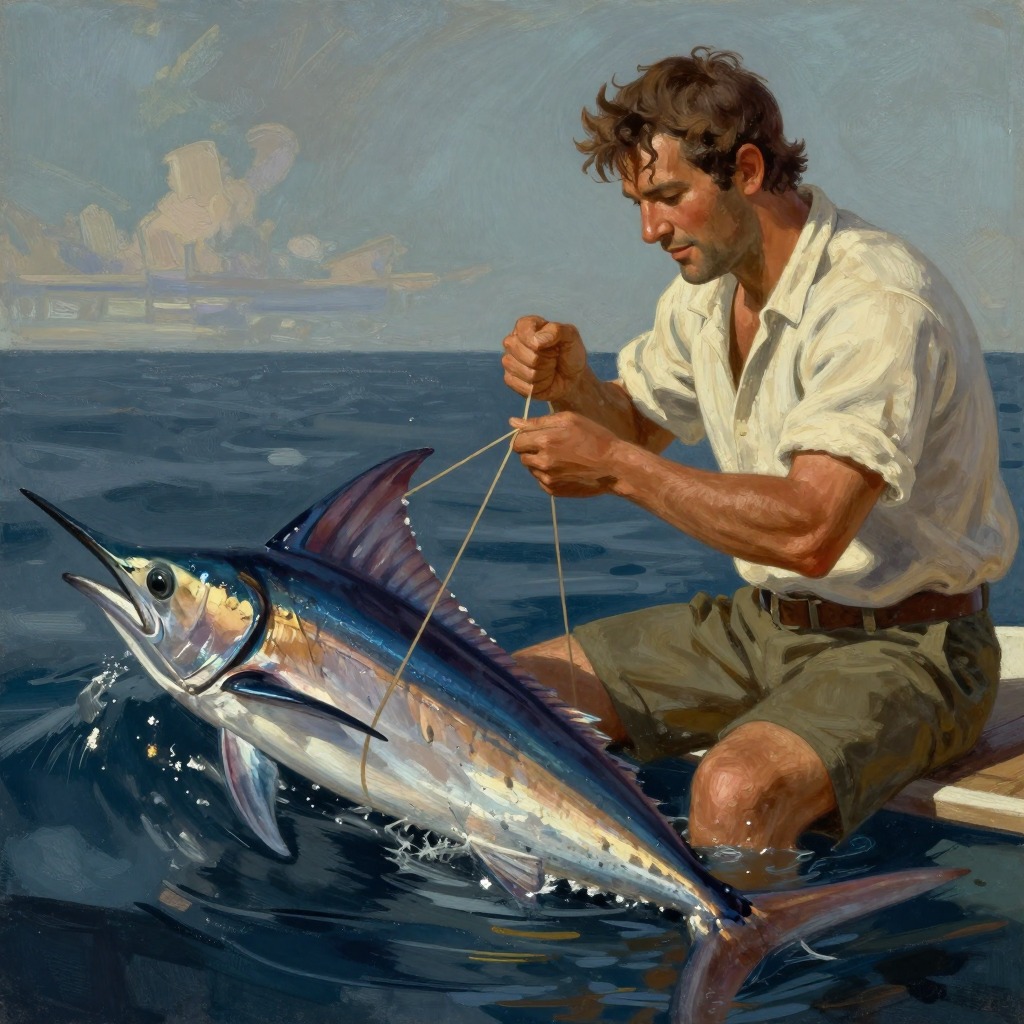
From the moment the marlin takes the bait, the line becomes the central axis of the struggle. Santiago holds the line delicately and softly, letting it run through his fingers without the fish feeling any tension. He feels the weight of the fish as it moves off, and the line begins to make a slow hissing sound in the water as the boat is towed. The line is a constant presence across his shoulders, cutting into his back and hands, and he must manage it with both hands, giving line when the fish surges and holding it when it rests. The line is also a source of information: its slant tells him the fish's depth and direction, and its tension reveals the fish's strength and mood. When the fish jumps, the line races out, and Santiago must keep it just inside of breaking strength, knowing that if he cannot slow the fish with steady pressure, it could take out all the line and break it.
The Line as a Source of Pain and Endurance
The line inflicts continuous physical suffering on Santiago. It cuts his hands badly, and he tries to keep the cutting across the calloused parts and not let the line slip into the palm nor cut the fingers. The line burns his back and his left hand, and he must shift it to new parts of his shoulders to manage the pain. The line is also the cause of his cramped left hand, which he calls a treachery of one's own body. He must eat the bonito to keep his strength up, and he wishes for the boy to help him, but he is alone. The line is a constant reminder of his isolation and his commitment: "I'll stay with you until I am dead," he says to the fish, and the line is the physical embodiment of that vow.
The Line's Role in the Shark Attacks
After the marlin is killed and lashed to the skiff, the line becomes a liability. The harpoon rope is short because Santiago had to cut away line to lash the fish. When the first Mako shark attacks, Santiago uses the harpoon, but the rope snaps, and the shark takes the harpoon and all the rope. Later, he lashes his knife to the butt of an oar to fight the shovel-nosed sharks, but the knife blade snaps. The line is no longer a tool for catching but a memory of what was lost. The old man's hands, which had been cut and burned by the line, are now used to club the sharks with an oar handle, but the line itself is gone, and with it, the connection to the great fish.
The Line as a Symbol of Skill and Fate
Santiago's mastery of the line is a mark of his skill as a fisherman. He keeps his lines with precision, unlike others who let them drift with the current. He knows that if he can keep the line straight, he will be ready when luck comes. But the line also represents his fate: it is the instrument of his greatest triumph and his ultimate defeat. The line that held the marlin is the same line that, after the sharks have taken the fish, is left as a memory of what was. The line is a symbol of the old man's will, his endurance, and his connection to the sea, but it is also a reminder of the limits of human strength against the forces of nature.